



Let’s imagine a scenario.
You're the CEO of a small but growing startup. You’ve got a team of engineers, marketers, and salespeople working daily to make things happen. Lately, you have noticed the team dynamics are a bit off. As a boss, you wanted to get to the heart of the issue, but how do you know what’s really going on?
That’s when you decide to implement a 360-degree evaluation process.
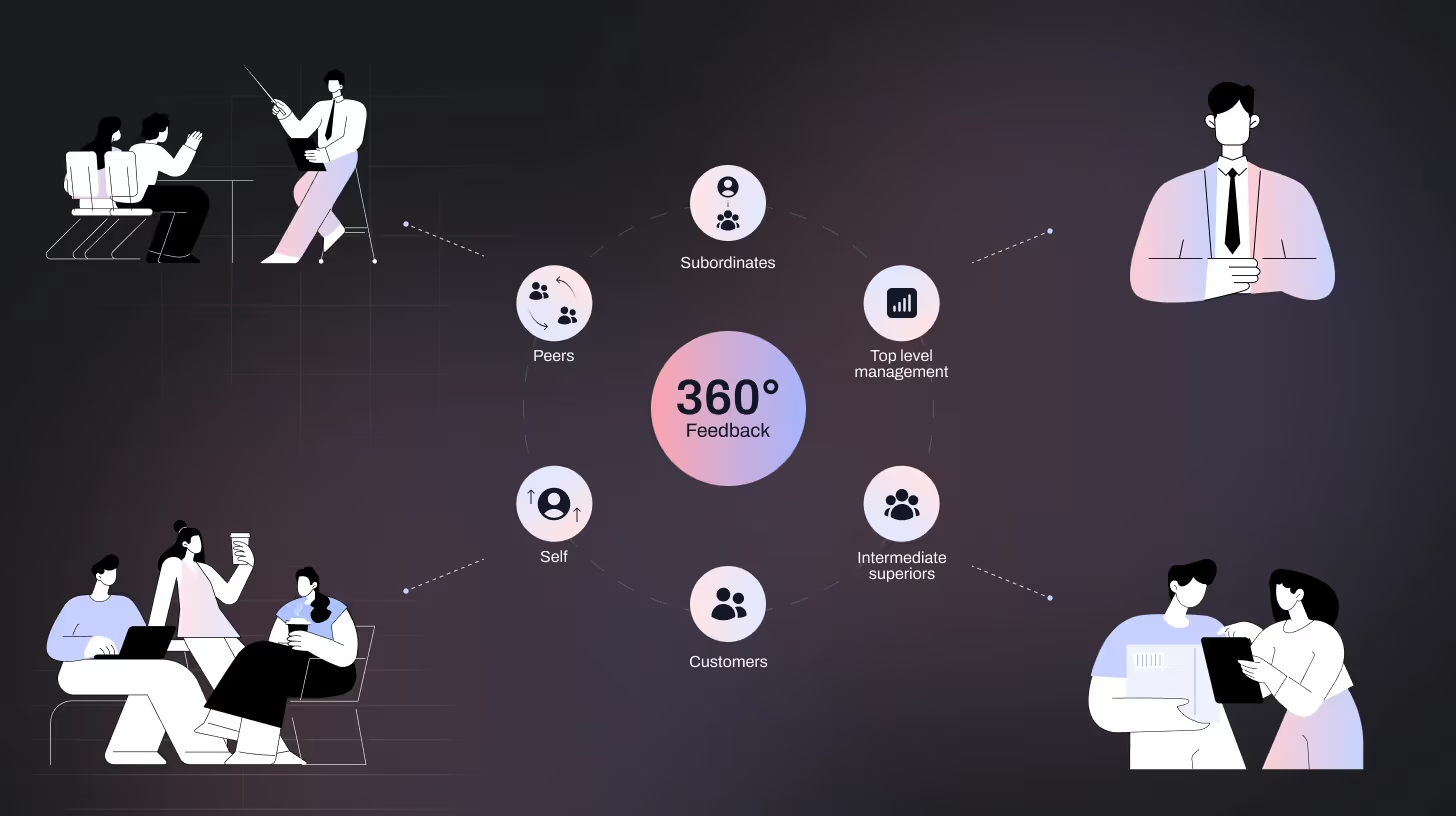
Instead of relying on just your perspective or the feedback from a single department head, you gather insights from every angle: peers, direct reports, and even clients. The results are eye-opening. You learn that one of your quieter team members feels their voice isn’t heard in meetings. Others feel like their growth is being overlooked, and it’s affecting their motivation. Suddenly, you have a clear picture of what’s working and what needs attention.
This is the power of 360-degree feedback: it gives you a complete, multi-faceted view of how your team is performing, beyond just the surface.
In this guide, you'll find proven 360-degree evaluation questions, best practices, and smart tips to make your evaluations more impactful, honest, and growth-driven.
What Is a 360-Degree Evaluation?
A 360-degree evaluation is a method of assessing employee performance by collecting feedback from different colleagues under the performance appraisal system. This creates a "full circle" or 360-degree view of their skills, behaviors, communication style, leadership abilities, and overall workplace impact.
The process typically involves 5 to 12 people, depending on your team size. This gives team members a clearer picture of how their actions and behaviors impact the team as a whole, which often looks very different from how they see themselves.
By hearing honest insights from others, they can recognize their strengths, uncover blind spots, and take meaningful steps to grow and improve.
Purpose of 360 Degree Evaluation Surveys:
- Identify performance gaps
- Support professional development
- Guide promotions and career planning
- Strengthen team collaboration
Related Read: 360° Feedback Survey Guide: Benefits, Template & Best Practices
How Often Should You Run a 360-Degree Evaluation?
Most organizations run a 360-degree evaluation once or twice a year. This frequency gives employees enough time to apply the feedback, improve their skills, and show measurable growth before the next review cycle.
However, the ideal timing depends on your goals:
Once a Year (Most Common)
Best for performance reviews, leadership development, and talent planning.
Twice a Year (Every 6 Months)
Great for fast-growing teams, people in new roles, or organizations looking to build a strong feedback culture.
Quarterly (Advanced Teams Only)
Use only if your team is mature in giving feedback and your organization has the bandwidth to support frequent coaching conversations.
When Should You Use a 360-Degree Evaluation?
A 360 review is most effective when used intentionally — not randomly.
Use a 360-degree evaluation when:
- A team member is preparing for a new leadership role
- An employee needs development-focused feedback, not judgment
- A team wants to improve cross-functional collaboration
- Managers want deeper insights for coaching and development
- A company is building a feedback-driven culture
- An employee is stuck and needs clarity on strengths and weaknesses
It should be used as a growth tool, not a surprise performance audit.
How TheySaid Helped a Company Improve 360 Reviews
A 120-employee SaaS company struggled with low-quality feedback and time-consuming performance reviews. After switching to TheySaid for their 360-degree evaluations, they saw fast, measurable improvements.
- Participation increased from 54% to 92% thanks to multi-channel survey delivery (email, Slack, mobile).
- Anonymous 360 questions created more honest, actionable feedback, revealing issues in cross-team communication and manager effectiveness.
- TheySaid’s AI summaries reduced analysis time from 18 hours to under 30 minutes, surfacing clear themes and ready-to-use action items.
- Within 90 days, the company saw a 27% boost in collaboration, 22% higher employee satisfaction, and 31% improvement in manager ratings.
TheySaid turned feedback into real growth by helping teams communicate better, act faster, and build a stronger performance culture. Try it for free and see the difference.
360 Degree Evaluation Questions Examples
360-degree evaluations work best when the questions are clear, specific, and tied to real behaviors. Below are sample questions you can use for self-evaluations, peer feedback, manager reviews, and customer insights.
Self-Evaluation Questions
These questions help team members reflect on their performance, strengths, weaknesses, and growth areas.
- I clearly understand my role and job responsibilities.
- I stay calm and motivated during challenging times in projects.
- I always take accountability for my mistakes and learn from them.
- How would you rate your communication skills on a scale of 1 to 5?
- State any barriers that are preventing you from performing your best.
- Is there something you would like to change in your work habits?
Peer Evaluation Questions
Sometimes your coworkers know you better than you know yourself. These questions help identify blind spots you might not even realize exist.
- This employee listens to the ideas of others and respects them.
- This person effectively manages conflict without escalating tensions.
- This person is easy to collaborate with.
- What impact does this employee have on the overall success of the organization?
- Does this employee handle feedback professionally?
- Can you share an example when this person supported the team in challenging times?
Recommended read: Online Employee Survey: Best Practices for HR Professionals

Manager/Supervisor Evaluation Questions
Great leaders empower, support, and inspire their teams to achieve more. These questions provide valuable feedback on leadership and management styles.
- My manager is very approachable and supportive.
- My manager recognizes and appreciates my good work.
- My manager addresses and resolves concerns and issues fairly.
- My manager effectively balances team needs with company goals.
- Does your manager encourage personal development and growth?
- How does a manager handle conflicts and disagreements within teams?
Customer or Client Feedback Questions
Your customers hold the key to your success; their feedback reveals what’s working and guides you toward the next big opportunity.
- The service I received met my expectations.
- I trust the company to deliver high-quality goods/services.
- I feel valued as a customer/client by the team.
- How satisfied are you with the product/service we provide?
- Can you describe a recent experience where we exceeded your expectations?
- What areas of our service need improvement?
Related read: 50 Best Customer Feedback Questions
360 Degree Evaluation Survey Use Cases
Explore how different teams can benefit from 360-degree performance reviews to enhance collaboration and growth.
360 Degree Evaluation Questions for Marketing Team
These questions assess how marketing team members collaborate on campaigns, manage projects, and engage with other departments like sales or product development.
- How effectively does the marketing team collaborate with other teams?
- Does the marketing team manage workload and timelines efficiently?
- How well does the marketing team take feedback from other departments?
- How aligned is the marketing team's work with the company’s overall goals and objectives?
- Do you think the marketing team successfully maintains brand consistency across all platforms and campaigns?
Recommended read: 8 Types of Market Research Surveys Every Marketer Should Know
360 Degree Evaluation Questions for Sales Teams
These questions help assess individual and team performance, collaboration, and the overall effectiveness of the sales department..
- How does the sales team collaborate with other teams to close deals?
- The sales team member consistently meets or exceeds sales targets.
- How does the sales team handle feedback from the internal team and clients?
- The sales team member stays organized and effectively manages their sales pipeline.
- In what areas should the sales team improve its strategy?
- Can you share an example where the sales team has successfully closed a challenging deal?
360 Degree Evaluation Questions for Customer Service Teams
These questions help evaluate customer service team members' effectiveness, communication skills, and overall performance.
- The customer service team member maintains professionalism even under pressure.
- How well does the customer service team resolve the issues?
- The customer service team stays up to date with products to deliver accurate, updated information.
- This team member takes ownership of issues until they're resolved.
- How well does this team member manage their time and simultaneously handle multiple inquiries or cases?
- In what ways could the customer service improve its response time?
Read: Survey Questions for Employee Satisfaction: Boost Engagement Today
360 Degree Evaluation Questions for Remote Teams
These 360-degree evaluation questions help assess how well team members collaborate, stay focused, and contribute to a thriving virtual workplace.
- This team member actively participates in virtual meetings and discussions.
- This team member communicates clearly and promptly in remote settings.
- This team member contributes to a positive and supportive virtual team environment.
Is the team member efficient in managing their workload remotely? - Does the team member manage their time and meet deadlines while working remotely?

Best Practices for a 360-Degree Evaluation Survey
A 360-degree evaluation, also known as a 360 Degree Performance Evaluation or 360 Degree Performance Review, works best when employees feel safe, supported, and genuinely encouraged to grow. The purpose of a 360 review is not to point fingers, but to help people understand how others experience their communication, teamwork, and leadership.
Here are the best practices to ensure your 360-degree evaluation survey delivers meaningful, honest, and actionable insights.
Clearly Explain the Purpose of the 360 Review
Before launching the survey, communicate why you’re running this 360 Degree Performance Review. When employees understand the goal better, collaboration, leadership development, or a stronger team culture, they’re more willing to give thoughtful, constructive feedback.
Keep All Feedback Anonymous and Confidential
An effective 360 Degree Performance Evaluation depends on psychological safety. Anonymous feedback encourages honesty and eliminates the fear of damaging relationships or hurting team morale.
Use Simple, Behavior-Based Questions
Ask clear questions that focus on observable behaviors, not personality traits.
Examples:
- How well does this person communicate?
- Does the employee handle conflict professionally?
- How effectively does the manager support team growth?
Keep the Survey Short and Focused
Long or repetitive surveys often overwhelm participants. A strong 360 review focuses on the most important competencies:
- Communication
- Teamwork
- Accountability
- Leadership
- Problem-solving
Train Employees on How to Give Constructive Feedback
Most people haven’t been taught how to give effective feedback. A short guideline can help them:
- Stay specific
- Focus on behaviors, not personality
- Give examples
- Be fair and balanced
This dramatically improves the quality of multi-rater feedback.
Turn Feedback Into Actionable Next Steps
A 360 review is only helpful when feedback leads to change. Instead of vague comments like “needs to communicate better,” turn insights into clear, realistic actions such as:
- Joining a communication workshop
- Leading meetings to build confidence
- Improving cross-team collaboration
Connect Insights to Career Development
Tie 360 feedback to each employee’s career path. This helps them see how working on communication, leadership, or collaboration directly contributes to growth and future opportunities.
Follow Up With Regular Check-Ins
A 360 Degree Performance Evaluation should never be a one-and-done activity.
Schedule consistent follow-ups to:
- Review progress
- Support skill development
- Set new goals
- Celebrate wins
This shows employees that the company values development, not just data collection.
Select the Right Reviewers
Choose reviewers who work closely with the employee. High-quality feedback comes from people who have seen the employee in real situations, not random or distant coworkers.
Use the Right 360 Degree Evaluation Tool
The tool you choose can make or break your evaluation process. A powerful 360 Degree Evaluation Tool like TheySaid helps you:
- Build custom 360 surveys
- Distribute them on multiple channels (email, Slack, mobile)
- Collect anonymous feedback
- Use AI analysis to summarize strengths, weaknesses, and trends
- Identify urgent issues instantly
TheySaid is one of the best tools for 360-degree performance reviews because it takes hours of manual feedback analysis and turns it into clear, actionable insights your team can use immediately.
Read: What are 360 Review Questions?
Common Mistakes to Avoid in 360 Degree Evaluation Reviews
360-degree reviews can be incredibly powerful, but only when designed and delivered thoughtfully. Beyond the common pitfalls, several overlooked mistakes quietly undermine the quality and credibility of the entire process.
Here are the mistakes most companies don’t even realize they’re making:
Allowing Personal Conflicts to Influence Feedback
360-degree surveys can unintentionally become an outlet for unresolved tension between coworkers. Without clear guidance, reviewers may let past disagreements shape their ratings. This creates noise instead of real insight.
Ignoring Cultural Differences in Global Teams
People from different cultures give feedback differently. Some cultures are more direct; others avoid criticism to maintain harmony. If your organization is global, this difference can distort results unless you account for it.
Over-focusing on Weaknesses Only
Many 360 reviews unintentionally lean toward “what needs fixing.” But focusing too heavily on weaknesses can demotivate employees. A balanced review highlights strengths, growth areas, and opportunities, not just flaws.
Giving the Same Questionnaire to Every Role
A software engineer, sales rep, and customer support agent shouldn’t be reviewed with identical questions. Different roles require different competencies.
Not Preparing Managers to Facilitate the Feedback Conversation
Managers often receive 360 reports but aren’t trained to guide constructive, empathetic conversations. Poor delivery can turn a growth-focused review into a defensive or emotional discussion.
Not Celebrating Strengths and Wins
A surprising mistake: skipping the positive parts. Employees need to hear what they’re doing right, not just what needs improvement. This builds confidence and encourages future growth.
How to Conduct an Effective 360 Degree Evaluation Survey
Here’s a simple breakdown of how to conduct 360 evaluations using a survey:
Step 1: Start with a Clear Purpose
Before anything else, set a clear purpose for running 360-degree evaluation surveys. When employees understand the bigger goals behind the survey, they are more likely to be engaged and honest in providing feedback.
Step 2: Create a Questionnaire
Meaningful feedback starts with the right questions. We recommend using both open-ended and closed-ended questions. This combination helps you capture not just the "what," but also the "why" behind someone's performance.
You need a blend of 360-degree manager evaluation, peer feedback, and self-assessment questions to get real insights.
When you use TheySaid, you can create a custom 360-degree evaluation survey with just a few clicks:
Enter your organization's website URL (optional, but helpful). Choose "AI Survey" or "AI Interview." Select a template or have TheySaid instantly generate 360-degree evaluation questions tailored to your team and goals.
Step 3: Train Employees
Prepare employees with training sessions so they feel confident and not confused about the process. In these sessions, walk them through everything they need to know, like:
- What a 360-degree evaluation actually is (and why it matters).
- What kinds of questions they’ll be asked.
- Who will be giving them feedback, and who they’ll be reviewing.
- Real examples of what helpful feedback looks like (and how to use it for growth).
- An open space where they can ask questions, share concerns, and get clear on the process.
Step 4: Distribute Surveys Easily Across Multiple Channels
TheySaid makes distribution painless. You can share your 360-degree evaluation surveys via:
- Email invitations
- In-app chats or notifications
- Slack channels
- QR codes for quick mobile access
Step 5: Let AI Analyze Responses and Surface Action Items
Once the responses are in, instead of spending days sorting through free-text responses manually, TheySaid’s AI:
- Detects key trends automatically
- Summarizes qualitative feedback
- Highlights critical action items and follow-ups
- Flag urgent feedback that needs leadership attention
Sign up for free with TheySaid and watch your team’s feedback lead to meaningful change.
Conclusion
360-degree evaluation questions are one of the most powerful ways to build stronger teams, develop better leaders, and create a healthier workplace culture. When paired with the right 360 Degree Evaluation Tool like TheySaid, feedback becomes clear, actionable, and truly meaningful.
By turning insights into action, you turn action into growth and set your team up for long-term success.
Try TheySaid to make your 360 feedback process faster, easier, and more impactful. Sign up for free!
Key Takeaways
- Know exactly why you're doing a 360-degree evaluation. Tell your team this isn’t about pointing fingers, it’s about helping everyone grow.
- Use a blend of rating scale questions (easy to measure) and open-ended ones (to hear the real story behind the numbers).
- Platforms like TheySaid make it easy to create 360-degree evaluation questions, send surveys out, and get clear action steps without spending weeks on it.
- After the surveys are done, share the big takeaways with the team. Even simple things like “We heard you want more growth opportunities” show you’re taking feedback seriously.
FAQs
How often should you run a 360-degree evaluation survey?
Ideally, once or twice a year. This gives employees time to act on feedback and show real growth between evaluations.
Should 360-degree survey results be tied to promotions or raises?
Not directly. It's better to use 360 feedback for professional development and coaching rather than high-stakes decisions. It builds more honesty and trust in the process.
How can I encourage employees to take the 360-degree survey seriously?
Set the right tone from the start. Explain the purpose, protect confidentiality, and show that you genuinely use the feedback to make positive changes, not punish mistakes.
Who should take part in a 360-degree evaluation?
Reviewers should be people who work closely with the employee's peers, managers, direct reports, and cross-functional teammates. In some roles, customers or clients can also contribute valuable insights.
How do you interpret 360-degree feedback results?
Focus on patterns, not isolated comments. Identify strengths, blind spots, and development areas, then turn them into a clear, actionable plan with measurable goals and follow-up check-ins.
What is the best tool for conducting a 360-degree evaluation?
A dedicated 360 Degree Evaluation Tool like TheySaid helps collect anonymous feedback, analyze responses with AI, highlight themes, and generate action items, making the whole process faster, easier, and more impactful.




.svg)