



People and businesses rely on feedback all the time.
Whether it’s to improve products, plan marketing strategies, or understand customer behavior, collecting insights is key.
There are two main ways to do this: questionnaires and interviews.
Both ask questions and aim to gather helpful information.
But they are not the same. Each method serves a different purpose.
Interviews dig deep into experiences and opinions. Questionnaires reach more people and capture structured responses at scale.
The method you choose depends on the insights you want to gain.
So, what exactly makes interviews and questionnaires different?
In this article, we will cover the differences between questionnaires and interviews and how to use them to best effect.
If you’re new to online forms and surveys, you might also like our guide on what an online survey is.
What is a Questionnaire?
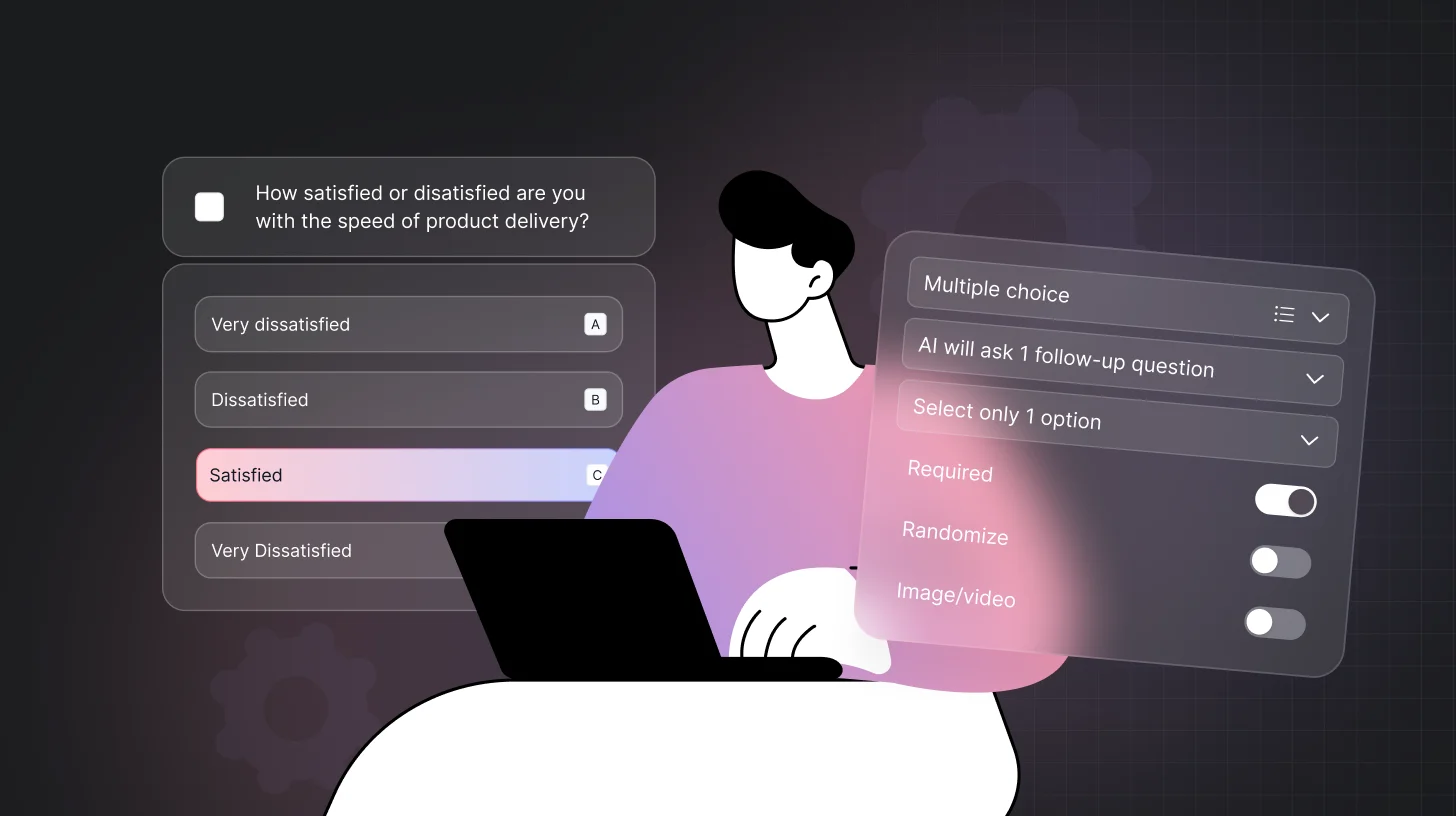
A questionnaire is a set of written questions shared with multiple respondents. It is usually easy to distribute and typically uses closed-ended questions, although open-ended items can be included to capture additional context or opinions.
They are cost-effective and quick, making it possible to reach a large audience. However, questionnaires may not capture the same depth of insights as interviews. Responses are often shorter, and there’s less opportunity to clarify answers.
Platforms like TheySaid help analyze questionnaire responses at scale. AI can detect trends, sentiment, and patterns, turning raw data into meaningful insights. Sign up for free and try it out.
Types of Questionnaires
There are two primary types of questionnaires used in research, each serving different purposes depending on the kind of data you want to collect.
Open-Ended Questionnaires
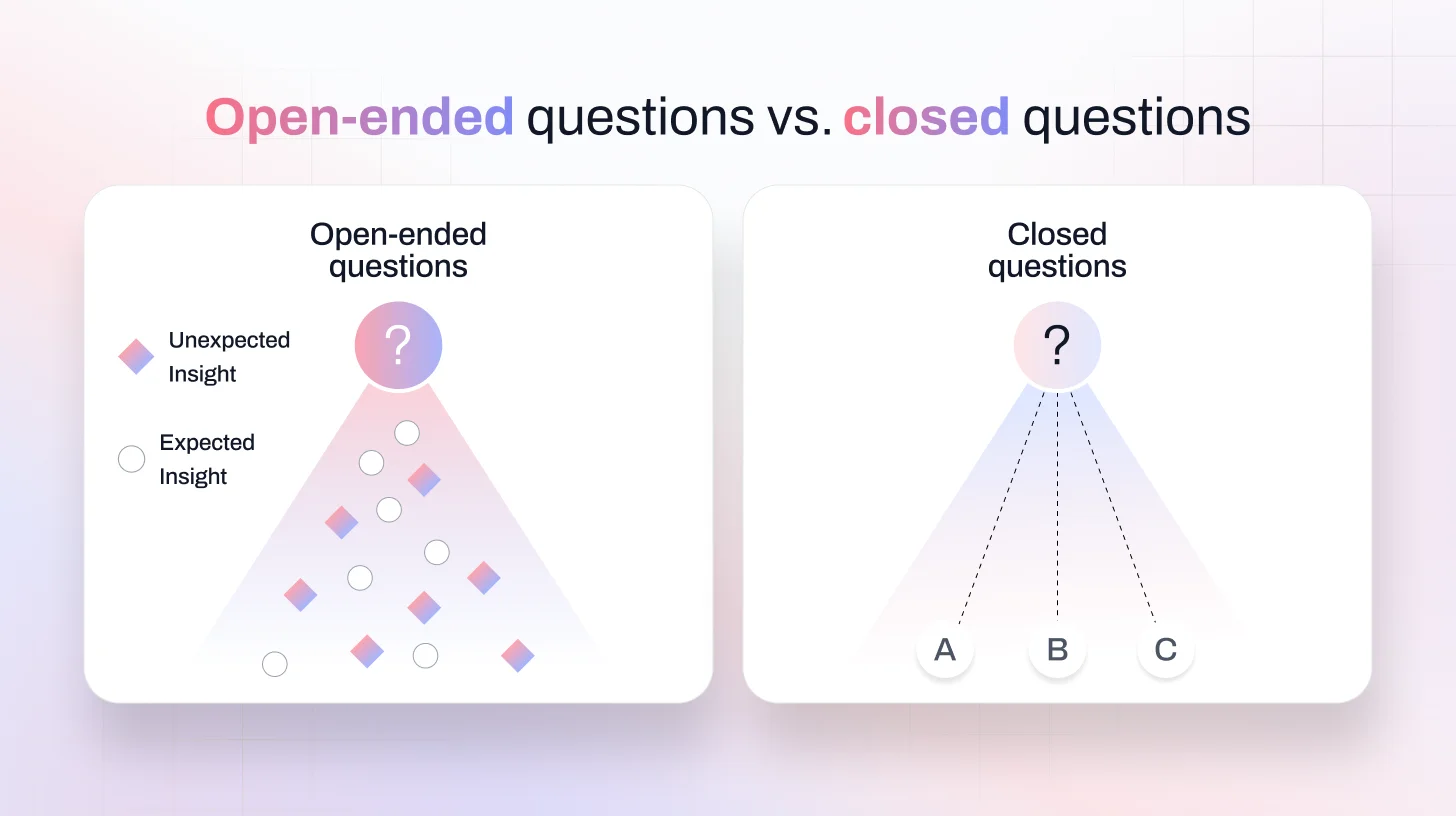
Open-ended questionnaires allow respondents to answer questions in their own words. They are not restricted to predefined options, allowing participants to express their thoughts, feelings, and experiences fully.
While the responses can be rich and insightful, analyzing them requires more time and effort. This type is ideal when you want to explore opinions, motivations, or nuanced perspectives that structured answers might miss.
Close-Ended Questionnaires
Close-ended questionnaires use predetermined answer options. Respondents select from multiple-choice answers, rating scales, or yes/no options. They are easier to administer and analyze, making them suitable for large-scale surveys where quantifiable data is needed.
However, they may limit the depth of insights, as participants cannot expand on their answers beyond the provided options.
Recommended Read: Open-Ended vs Closed-Ended Questions: Strategies and Examples
What is an Interview?
Interviews are personal conversations between a researcher and a respondent. They allow you to ask open-ended questions and explore thoughts in depth. You can follow up, clarify answers, and dive deeper when needed. This makes interviews great for understanding motivations, feelings, and detailed experiences.
However, interviews take more time. They usually involve fewer participants and require more resources.
With TheySaid, even interview data can be analyzed faster. You can track patterns, summarize responses, and turn conversations into actionable insights.

Types of Interviews
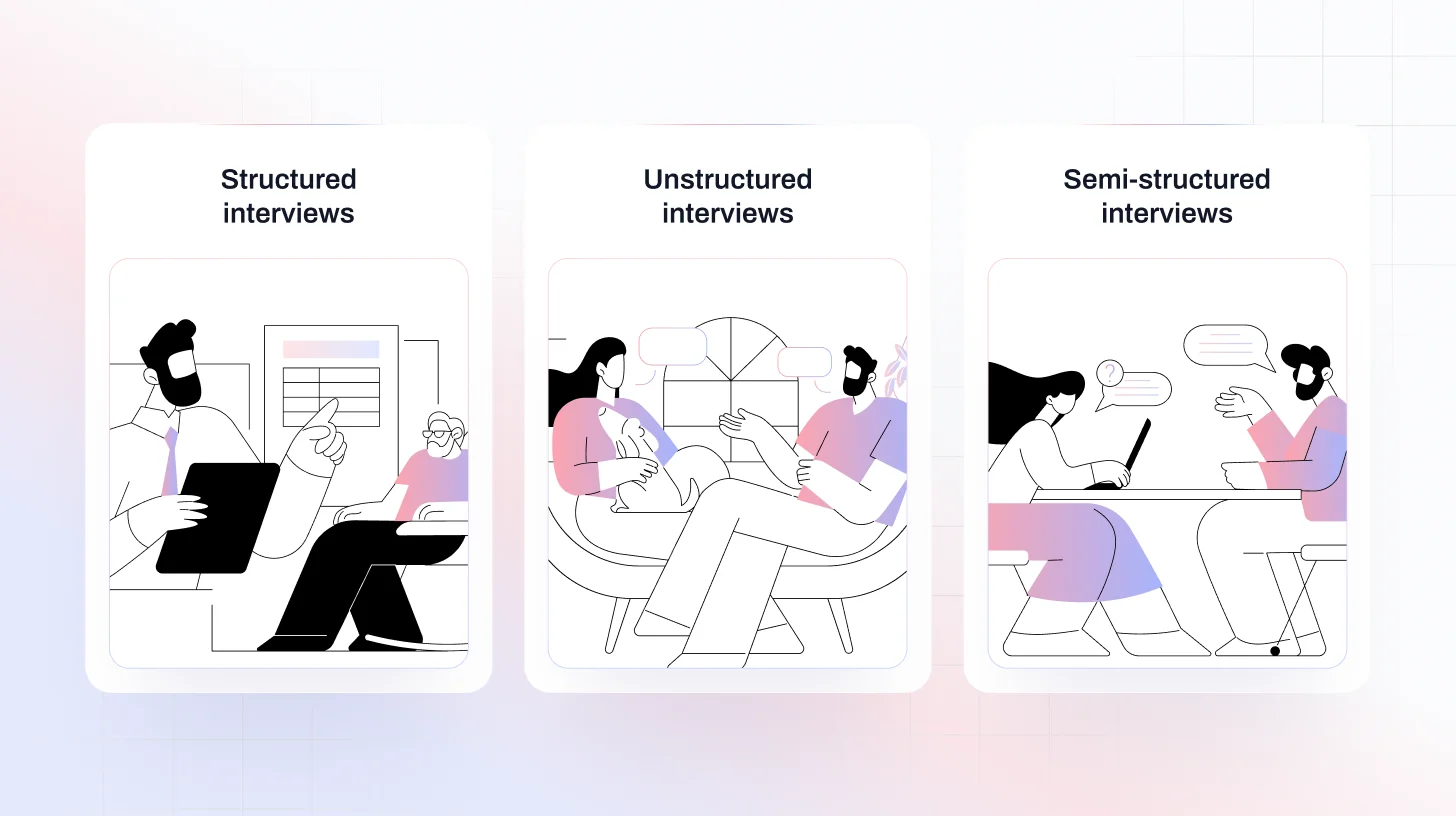
There are three main types of interviews: structured, semi-structured, and unstructured interviews.
Structured Interviews
Structured interviews follow a predetermined set of questions and talking points created by the researcher. In their most rigid form, both the wording and the order of the questions stay the same for every participant. This consistency makes the results easy to replicate across different interviewers and respondents.
Unstructured Interviews
Unstructured interviews don’t follow a fixed format, but that doesn’t mean they’re random or unplanned. While they may feel like a natural, free-flowing conversation, the interviewer is still intentionally guiding the discussion to ensure all key topics are covered, all while helping the participant feel comfortable and open.
Semi-Structured Interviews
Semi-structured interviews are the most commonly used format in qualitative research. They strike a balance between the flexibility of unstructured interviews and the consistency of structured ones. The researcher brings a list of guiding questions and themes, but doesn’t need to follow exact wording or order. This hybrid style allows for deeper exploration while still maintaining focus and comparability.
Read: What It's Like to Take an Interview with TheySaid's AI
Questionnaire vs Interview: Main Differences You Should Know
Although both methods collect feedback, they serve very different purposes and produce different types of data. Understanding the key differences in questionnaires vs interviews helps you choose the right approach depending on the depth, scale, and insight you want to capture.
How Data Is Collected
Questionnaires are usually completed by respondents on their own, either online, through email, or on printed forms. Interviews, on the other hand, involve real-time interaction, whether it’s in person, over the phone, or via video call. While questionnaires tend to use more fixed, objective questions, interviews encourage open-ended, thoughtful responses.
Complexity and Flexibility
Questionnaires follow a fixed set of questions in a set order, making them relatively simple and consistent for every respondent. Interviews are more dynamic. Interviewers can mix question types, technical, behavioral, or skill-based, and adjust them based on how the conversation flows. This flexibility allows deeper exploration of the participant’s thoughts and experiences.
Cost and Resources
Interviews generally require more time, coordination, and resources. Scheduling, conducting sessions, and sometimes managing travel can make interviews more expensive. Questionnaires are far more cost-effective. They can be sent to large groups at once, reach people across wide geographic areas, and require minimal effort during data collection.
Comfort and Openness in Responses
Because questionnaires can be anonymous, respondents may feel more comfortable sharing honest or sensitive opinions. However, written answers can sometimes be misinterpreted. In interviews, participants can explain their meaning clearly, but the presence of an interviewer may make some people feel hesitant to discuss controversial topics.
Time Requirements
Interviews give participants limited time to think before responding, and the length of the conversation can vary from a last ten minutes to an hour. Questionnaires allow respondents to take their time, reflect, and provide well-considered answers. They can also be completed much faster when they consist of simple, closed-ended questions.
Accuracy and Depth of Information
Interviews often lead to more accurate, richer data because the interviewer can probe further, ask clarifying questions, and explore deeper insights. Questionnaires, while easy to distribute, are less precise since there’s no opportunity to clarify misunderstandings or guide respondents toward more detailed answers.
Respondent Burden
Questionnaires are generally shorter and quicker to complete, making them more convenient for large groups. Interviews require more effort from participants, which can limit willingness or availability.
Risk of Bias
Interviews carry a higher risk of interviewer bias, where tone, expressions, or phrasing influence responses. Questionnaires minimize this risk because all participants receive the same standard instructions and questions.
Data Consistency
Questionnaires produce highly consistent data because every respondent answers the same questions in the same format. Interviews vary depending on the interviewer’s approach, skill level, and conversational flow.
Scalability
Questionnaires are easy to scale to hundreds or thousands of people at once. Interviews are difficult to scale because they must be conducted one at a time by trained interviewers.
Questionnaires vs Interviews Comparison Table
Want to see how other marketing teams decide between these methods? Check our list of top marketing research surveys.
When to Choose a Questionnaire or an Interview?
Choosing between an interview and a questionnaire depends on your goals, resources, and the type of insights you need.
Use an Interview When:
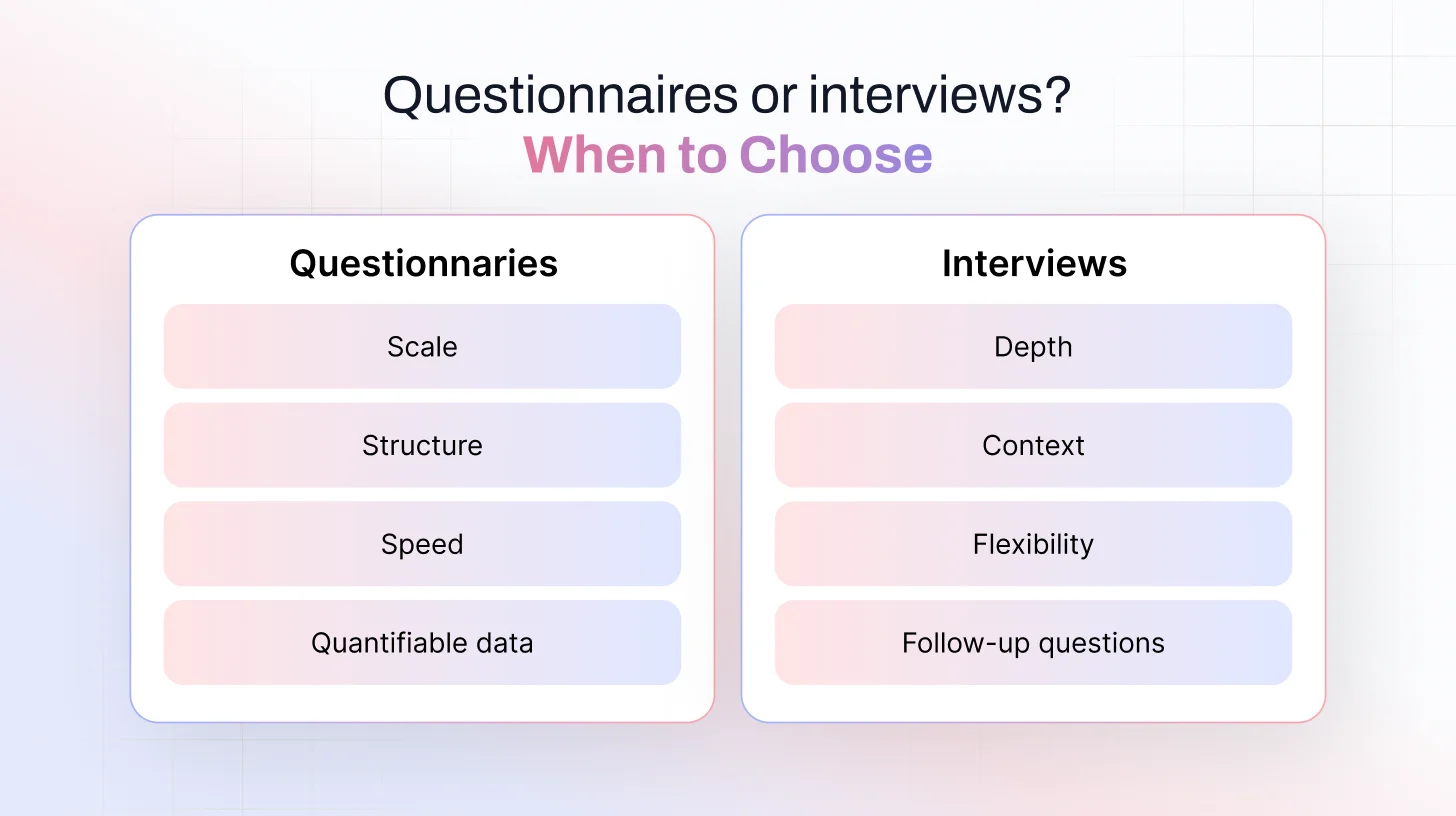
- You need an in-depth understanding of opinions, motivations, or experiences.
- Your topic is complex or sensitive and requires clarification.
- The sample size is small, but detailed insights matter.
- You want to probe responses and ask follow-up questions.
Use a Questionnaire When:
- You need to reach a large audience quickly and cost-effectively.
- The questions are structured and can be answered without explanation.
- You want quantifiable, objective data.
- You are collecting feedback from remote or widespread participants.
Sometimes, a Combination Works Best:
- Start with a questionnaire to identify trends or common issues.
- Follow up with interviews to dig deeper into specific responses.
Collect, Create, and Analyze Feedback at Scale With TheySaid
Whether you need questionnaires or interviews, TheySaid helps you run the entire process from one platform. You can build questionnaires in minutes, write questions yourself, import existing surveys, or let AI generate a complete survey instantly.
And when it comes to interviews, it actually conducts AI-driven interviews for you. That means you don’t need live interviewers, scheduling, or manual note-taking. The AI asks questions, follows up intelligently, and captures responses with full context saving time, cost, and effort.
On top of that, TheySaid automatically summarizes responses, identifies sentiment, tags themes, tracks trends, and generates shareable insights dashboards, turning raw feedback into decisions without manual analysis.
Design surveys, run AI interviews, and get insights instantly. Try TheySaid free and see the difference.
Key Takeaways
To choose between questionnaires vs interviews, start by defining whether you need depth or scale. Questionnaires give you fast, structured results, while interviews uncover deeper motivations and context. Use questionnaires when your questions are clear and measurable, and choose interviews when you need clarification or follow-up. If possible, combine both to collect broad insights first and then dive deeper into specific responses. Finally, use AI platforms like TheySaid to build surveys, run AI interviews, and automatically analyze data, so you can get insights faster without manual work.
FAQs
1. What is the difference between an interview and a questionnaire?
A questionnaire collects structured responses from many people at scale, while interviews involve real-time conversations that go deeper into motivations, opinions, and personal experiences. Questionnaires are more quantitative, while interviews are usually qualitative and more detailed.
2. When should I use interviews instead of questionnaires?
Use interviews when you need deeper insight, emotional context, clarification, or follow-up questions. Interviews are ideal for complex topics, sensitive discussions, or situations where you want to understand the “why” behind responses rather than just the numbers.
3. Can I combine interviews and questionnaires for better results?
Yes. Many organizations start with a questionnaire to gather large-scale feedback and then run interviews to explore certain responses in more detail. This mixed-method approach gives both depth and scale, improving decision-making and research accuracy.
4. How can TheySaid improve my survey analysis?
AI platforms such as TheySaid automatically process responses, detect sentiment, group themes, summarize results, and highlight trends, saving hours of manual work. Instead of reading every answer yourself, AI turns raw feedback into clear insights instantly.
5. What are the benefits of AI-driven feedback dashboards?
AI dashboards surface patterns faster, visualize trends, compare segments, and help teams understand customer needs in real time. With centralized insights and automated reporting, organizations can make data-driven decisions faster and with greater confidence.
.webp)


.svg)