




Companies building digital products have a problem. They spend months designing apps, websites, and software and then real people use them in ways nobody on the team anticipated.
Buttons get missed. Forms confuse people. Checkout flows fall apart at the last step. To catch these issues early, companies rely on user testing, and they pay real people to do it.
Making money testing websites and apps is exactly what it sounds like: you get paid to use digital products and share your honest thoughts while you’re using them. No technical background required. No design skills needed. Just your ability to think out loud and react like a real user.
This guide covers everything: what user testing actually involves, what companies are paying for, how to get approved fast, how to earn more by getting higher ratings, and which platforms are worth your time.
Quick Answer
To make money testing websites and apps, sign up on one or more paid user testing platforms, complete a practice test to get approved, and then complete studies as they become available. Tests pay $5–$120 depending on length and type. Most casual testers earn $50–$200/month. Dedicated testers on multiple platforms can earn $300–$500/month. They Said lets you start immediately by completing a sample test no account required. Just go to theysaid.io/get-paid-to-test, complete the sample session, leave your name and phone number, and they’ll contact you when a paid test matches your profile.
What is paid website and app testing?
Paid website and app testing is a form of user research where companies pay everyday people to use their digital products and share feedback. During a session, you’ll be given a set of tasks to complete, find a product, sign up for a service, and complete a checkout, while talking through what you’re thinking out loud.
Your screen is recorded. Your voice is recorded. The company watches the recording to understand where people struggle and why. This is called usability testing, and it’s one of the most valuable tools product teams have. A five-minute session from a real user often reveals more than weeks of internal debate about why something isn’t working.
You’re not being tested. The product is. Companies aren’t looking for the “right” answers; they want to know what a normal person actually does and thinks when they encounter something for the first time.
How much can you realistically earn from user testing?
This is the question everyone asks first, and most guides give vague or inflated answers. Here’s the honest version based on real tester reports and platform data.
Realistic monthly earnings:
- Casual (1–2 platforms, check occasionally): $50–$100/month
- Active (3–4 platforms, check daily): $150–$300/month
- Dedicated (multiple platforms, fast response, high rating): $300–$500/month
- With moderated interviews added in: $500+ possible but inconsistent
The honest truth: User testing is a genuine side hustle, not a full-time income. Work is sporadic. You might get 5 tests in one week and none the next. The testers who earn most consistently sign up across multiple platforms, respond to test invitations within minutes of receiving them, and maintain high ratings by giving detailed, useful feedback every single time.
What do you need to start making money testing websites and apps?
The barrier to entry is intentionally low. Companies want feedback from real, everyday people, not experts. Here’s what you actually need:
- A device: Desktop or laptop for most tests. Smartphone or tablet for mobile app tests. Some platforms support both.
- A microphone: Built-in laptop mic works for most platforms. A dedicated headset mic improves quality and can increase your approval rate.
- Stable internet: Essential for screen sharing and voice recording. Slow or dropping connections cause incomplete sessions.
- A PayPal account: Almost every platform pays via PayPal. Set one up before you apply.
- Age 18+: Required by all platforms.
- English fluency: Most tests are in English. Some platforms support additional languages. TheySaid supports 70+ languages, which opens up more test opportunities if English isn’t your first language.
What actually happens during a user test?
Most people picture user testing as something complicated. It’s not. Here’s exactly what a typical session looks like from the moment you accept a test to the moment you get paid.
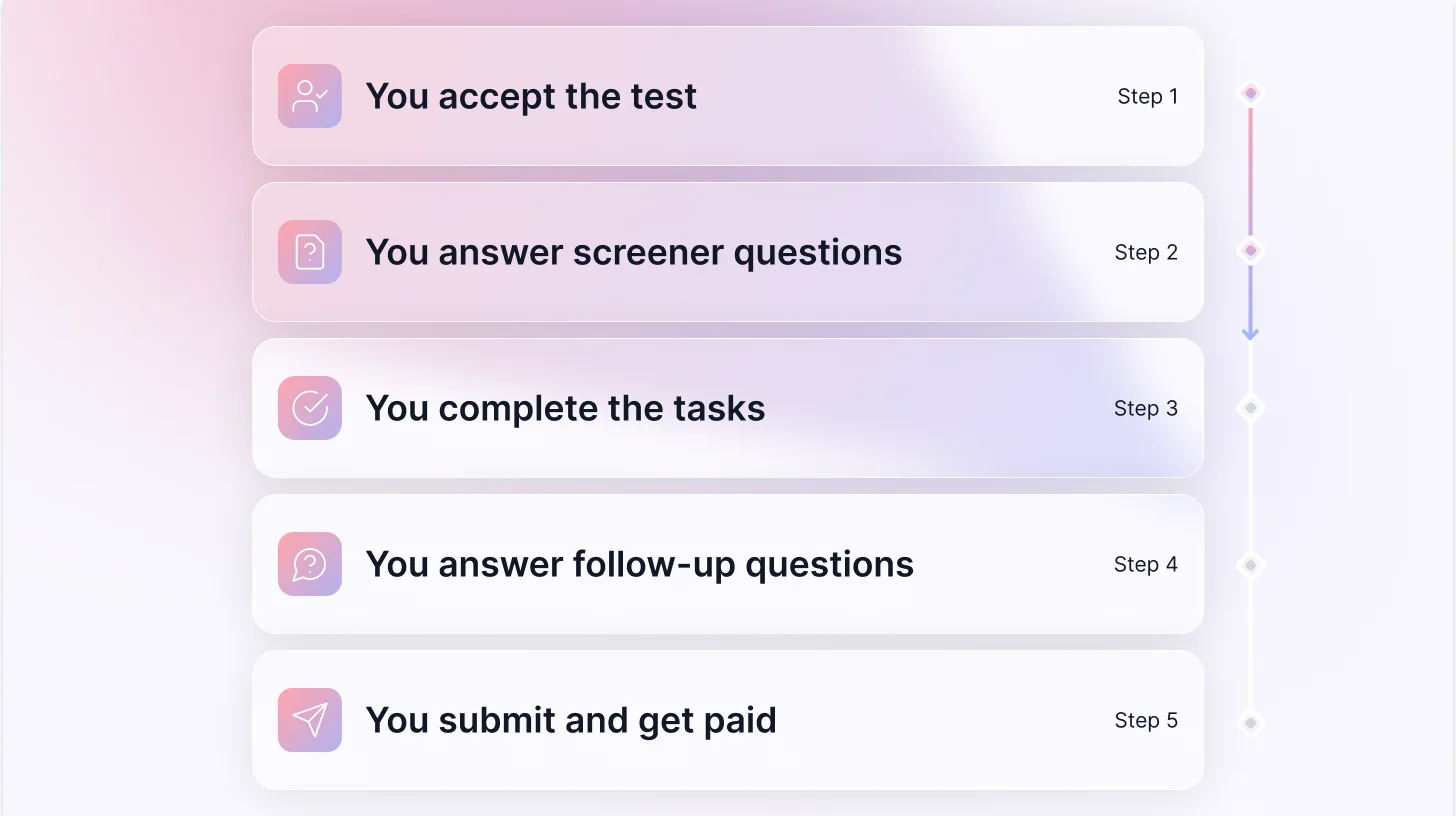
Step 1: You accept the test
You receive a notification either by email, app alert, or by checking your dashboard. Tests are often first-come, first-served, so responding quickly matters. You’ll see the pay amount and estimated time before you accept.
Step 2: You answer screener questions
Before the actual test begins, you’ll answer 3–10 qualifying questions. These check whether you match the profile the company is looking for. Answer honestly; if you lie to qualify and then don’t match expectations during the session, you’ll get a poor rating and fewer future tests.
Step 3: You complete the tasks
The platform tells you what to do: “Go to this website and find a product under $50.” “Sign up for an account as if you were a new customer.” “Send a message using this app.” As you do each task, you talk through what you’re thinking out loud. This is the most important part.
The think-aloud technique: Say everything you notice, wonder, or feel as you complete each task. “I’m looking for a search bar, but I can’t find one.” “This button isn’t where I expected it.” “I’m confused about whether this means I’m logged in or not.” Companies are paying for your unfiltered reaction, not your evaluation. There are no wrong observations.
Step 4: You answer follow-up questions
After completing tasks, most tests include a few written or spoken questions: “What was your overall impression?” “What would you change?” “Did anything surprise you?” Answer in detail. Vague one-sentence answers are a leading cause of low ratings.
Step 5: You submit and get paid
Once you submit the session, the company reviews it. If your recording is clear, your feedback is useful, and you have completed all tasks, payment is processed. Most platforms pay via PayPal within 14 days of approval. UserTesting pays exactly 14 days after completion. Userlytics pays every 15 days on a Friday. TheySaid pays after each approved session.
How TheySaid works for testers (and how you get paid)
TheySaid takes a different approach from traditional user testing platforms, and it’s worth understanding because it changes how you get started and how the sessions feel.
What TheySaid pays
Most TheySaid sessions pay between $10 and $50 and take 10–30 minutes to complete. Payouts are sent to your account after each approved session. Because TheySaid’s AI moderator guides you through the session in real time, sessions tend to feel shorter than they are. There’s no awkward silence or uncertainty about what to do next.
No Signup required to apply
Most platforms make you create an account, fill out a profile, and then complete a practice test before you can access any paid work. They said to skip the queue. You go to theysaid.io/get-paid-to-test, complete a short sample session (5–15 minutes, runs in your browser), and at the end, you leave your name and phone number. That’s the entire application process. They contact you when a paid test matches your profile.
AI guides you through every session
Traditional platforms record you completing tasks alone, and a researcher watches the video later. TheySaid’s sessions are guided by an AI moderator in real time. The AI gives you instructions, asks follow-up questions when you hesitate or say something interesting, and adapts to your responses. It feels more like a conversation than a test.
This actually makes sessions easier for first-time testers. If you’re not sure what to say next, the AI prompts you. You’re never sitting in silence, wondering if you’re doing it right.
.webp)
Works in 70+ Languages
If English isn’t your first language, TheySaid is one of the few platforms where that doesn’t limit your opportunities. Tests are available in 70+ languages, which means you’re competing in a much smaller pool for your language-specific studies and getting matched to tests that actually fit.
Any Device, No Downloads
TheySaid tests run entirely in your browser on desktop, tablet, or mobile. You don’t need to install any software, browser extension, or app.
How to start with TheySaid right now:
1. Go to theysaid.io/get-paid-to-test
2. Click “Do a sample test to apply”
3. Complete the short session in your browser, no account needed
4. Leave your name and phone number at the end
5. TheySaid contacts you when a paid test matches your profile
Best platforms to make money testing websites and apps
Signing up on multiple platforms is the single most effective way to increase your monthly earnings. Each platform has a different pool of companies running studies, so more platforms means more test invitations. Here’s a comparison of the most legitimate options:
How to get more tests and earn more
Getting approved is easy. Getting enough tests to earn consistently is where most people struggle. Here’s what actually moves the needle:
1. Respond Within Minutes
Tests on most platforms are first-come, first-served. If you check your email once a day, you’re too late. Set up real-time notifications on every platform you join. When a test invitation comes in, accept it within minutes. Many testers who earn $300+ per month say the speed of response is the single biggest factor in their test volume.
2. Think Out Loud the Entire Time
Silence during a recording is the most common reason for low ratings. If you stop talking for even 10 seconds, a researcher watching your session has no idea what you’re thinking. Keep a constant commentary going: what you see, what you expect, what confuses you, what you’re trying next. Narrate as if you’re explaining what you’re doing to someone who can’t see your screen.
3. Be Specific, Not Polite
Companies don’t need you to be kind about their product. They need to know what actually doesn’t work. “I couldn’t find the checkout button” is useful. “The checkout was a bit confusing” is not. When something frustrates you, say exactly what frustrated you and why. Specific, critical feedback gets higher ratings than polite, vague feedback.
4. Complete Every Step
Abandoning a task midway — even if you genuinely can’t complete it — should be accompanied by an explanation of why. Don’t just stop. Say “I can’t figure out how to do this because I don’t see a clear way to proceed from here.” Incomplete sessions without explanation are one of the fastest ways to get a poor rating.
5. Fill Out Your Profile Completely
Every platform uses your profile to match you with relevant studies. An incomplete profile means fewer matches. Fill in every field: your industry, job title, tools you use, devices you own, shopping habits, and family situation. The more data they have, the more tests you qualify for. Update your profile when your circumstances change.
6. Sign Up on Multiple Platforms
No single platform can give you consistent daily work. The companies running studies are spread across platforms. The testers earning the most consistently treat this like a portfolio: TheySaid for AI-guided studies, UserTesting for volume, User Interviews and Respondent for high-paying moderated sessions, Userlytics to fill the gaps. Each platform requires 20–30 minutes to set up. Do it once, and you’re covered.
7. Keep Your Ratings High
Most platforms have a rating system where researchers score your sessions. Higher ratings unlock more tests and sometimes higher-paying studies. A single poor rating won’t ruin your account, but a pattern of them will reduce your invitations. If you don’t have time to do a session properly, don’t accept it. A skipped test is always better than a rushed, low-quality one.
Tips for first-time user testers
Everyone’s first test feels awkward. You’re talking to yourself on screen while doing tasks you’ve never thought twice about. Here’s what makes the difference between passing your practice test and failing it:
- Do the practice test in a quiet room: Background noise, TV, or people talking degrade your recording and can cause rejection.
- Use headphones with a mic if you have them: Audio quality matters. A $20 headset produces significantly cleaner audio than a laptop’s built-in microphone.
- Don’t rehearse or perform: Testers who sound scripted or overly polished get flagged. Natural, unfiltered reactions are exactly what companies want. If you’re confused, sound confused.
- Read the task carefully before starting: Rushing into a task without understanding it leads to incomplete sessions. Take 10 seconds to read the full instructions before you begin.
- Pretend you’re explaining to a friend: If you’re struggling to think aloud, imagine you’re walking a friend through using the website over the phone. What would you say?
- Don’t ask for the answer: If you can’t find something, don’t ask where it is. Say you can’t find it and explain why. That’s exactly the feedback the company needs.
Is getting paid to test websites legit?
Yes, completely. User testing is a legitimate, multi-billion-dollar industry. Companies like Microsoft, Adobe, Airbnb, and thousands of startups use platforms like TheySaid and UserTesting to get feedback from real users before launching products. The platforms that pay testers are real companies with real clients and real money to spend on research.
The signs of a legitimate platform: free to join, pays via PayPal or verified payment methods, doesn’t ask for your bank details or payment to participate, and has verifiable reviews on Trustpilot or G2. Every platform listed in this guide meets those criteria.
The one thing to be realistic about: it’s a side income, not a replacement for a job. Test availability is unpredictable. You might have a great month and a quiet one. Treat it as supplemental income, and it’s genuinely worth your time.
Frequently Asked Questions
How much do website testers get paid?
Short unmoderated tests pay $5–$10 for 10–20 minutes. Moderated live sessions pay $30–$60 for 30–60 minutes. B2B professional interviews pay $75–$150. Most active testers earn $150–$300/month across multiple platforms.
Do I need experience to become a user tester?
No experience is required. Platforms specifically want everyday users, not experts. The only skill needed is the ability to talk through what you’re thinking while completing tasks on a screen.
How do I get approved as a user tester?
Complete the platform’s practice test. Speak clearly and constantly throughout the session, complete every task, and give specific feedback in written questions. Most approvals happen within 1–3 days. TheySaid doesn’t require a separate approval process to complete the sample test, and you’re added to their tester pool.
How long does a user test take?
Most unmoderated tests take 10–20 minutes. Moderated sessions run 30–60 minutes. Some longer research studies take up to 90 minutes. The pay amount shown before you accept always corresponds to the expected time commitment.
How do I get paid?
UserTesting pays via PayPal exactly 14 days after completing a test. Userlytics pays every 15 days on a Friday via PayPal. Userbrain pays weekly via PayPal. TheySaid pays after each approved session, and payment terms are confirmed when you’re matched with a paid study. Some platforms also offer gift card alternatives.
Can I do user testing from any country?
Most platforms accept testers from the US, UK, Canada, and Australia as a baseline. Some, including TheySaid, support 70+ languages and accept testers from a much wider range of countries. Check each platform’s eligibility requirements when signing up.
How do I get more testing opportunities?
Sign up on multiple platforms, enable real-time notifications, respond to invitations within minutes, maintain high ratings by giving detailed feedback, and keep your profile completely filled out. Testers who do all five consistently earn significantly more than those who don’t.
What is the think-aloud method in user testing?
Think-aloud means verbalizing everything you notice, think, and feel while completing tasks. Rather than silently doing the task and answering questions afterward, you narrate in real time: “I’m looking for the login button, but I see it’s at the bottom of the page, not the top where I’d usually expect it.” This live commentary is what companies pay for.
Is user testing a good side hustle?
Yes, with realistic expectations. It’s flexible, requires no experience, and pays well per hour compared to most side hustles. The limitation is test availability; you can’t control how many tests come in. Active testers on multiple platforms typically earn $150–$300/month for a few hours of work per week.

.svg)


