




People crave growth, not just promotions!
If you want to build a team that performs, stays, and leads, your development approach needs to be based on actual data, not assumptions. However, many organizations fail to understand what training works, which skills need to be developed, and how to personalize development journeys on a large scale. This is where professional development surveys come in.
In this blog, we’ll break down the smartest questions to ask, how to match them to career stages, and how to turn feedback into action for employees, teachers, and future leaders alike.
TL;DR
- Professional development surveys reveal skill gaps, training effectiveness, and career growth needs across teams and educators.
- Asking the right questions around career development, learning preferences, mentorship, and upskilling leads to more actionable feedback.
- Segmenting survey results by role, tenure, or career stage helps organizations design targeted development programs.
- Regularly analyzing feedback ensures professional development efforts improve performance, engagement, and retention over time.
What is a Professional Development Survey?
A professional development survey is a tool for identifying the types of development opportunities employees need to fill their skill gaps and to align with their career aspirations.
It’s often used as a professional development feedback survey or learning and development (L&D) survey to evaluate training effectiveness, identify skill gaps, and support career growth.
The survey also captures feedback on training, preferred learning methods, and the effectiveness of development programs, helping you identify areas for improvement.
When done right, professional development surveys:
- Highlight skill gaps
- Improve employee retention
- Inform better L&D strategies.
- Boost engagement and performance
5 Stages Of Professional Development
Professional development surveys are most effective when questions align with an employee’s career stage.
Recommended read: 70 Employee Feedback Survey Questions You Can Ask
What Questions Should I Ask In A Professional Development Survey?
A strong professional development survey should ask about skill gaps, career goals, training effectiveness, mentorship support, and readiness for future roles. The right questions help turn feedback into clear development actions.
50+ Professional Development Survey Questions For Employees
Professional Growth Questions
- I am continuously evolving and learning in my role.
- What new skills have you acquired in the last 6 months?
- Where do you see your career progressing in the next 1–3 years?
- Do you agree that you have enough opportunities to grow in the company ?
- What can the company do to help you grow professionally?
- How effective are the resources provided to support your professional development? (e.g., training, mentorship, tools)
- What does “growth” mean to you at work?
Career Development & Advancement Survey Questions
- Do you have the opportunity to apply for new roles internally?
- On a scale of 1 to 5, how would you rate the company’s promotion criteria?
- Have you discussed your career aspirations with your manager?
- I see a clear path to advancing in my current role.
- Do you have access to the company's career development programs?
- Would you recommend us as a place to grow a long-term Career?
Sense Of Accomplishment Questions
- I feel a sense of accomplishment in my current role.
- My contributions are making a huge impact on the company’s goals.
- Share an example of a project that made you feel most accomplished.
- How aligned is your daily work with what you consider personally rewarding?
Training & Learning and Development Survey Questions
- Have you had access to relevant training opportunities in the past 6 months?
- What specific skill would you like to develop?
- How relevant is training to your current job role?
- What training format do you prefer? (e.g., in-person workshops, online courses, 1:1 coaching, peer learning)
- What type of training programs would you like to see offered in the company?
Recommended read: Training Feedback Survey: 12 Questions That Boost Learning Results
Mentorship Questions
- The feedback I receive from my manager helps me grow and develop skills.
- On a scale of 1 to 10, how effective is your mentor in supporting your goals?
- I feel comfortable discussing challenges with my mentor.
- How often do you talk or meet your mentor?
- Does the company actively encourage and support mentorship?
Recommended read: 60 Leadership Feedback Survey Questions
Upskilling And Reskilling Questions
- Are you aware of the upskilling or reskilling opportunities available to you at this company?
I am interested in learning new skills that differ from my current role . - How relevant are the upskilling/reskilling programs to your career goals?
- What specific skills would you like to upskill over the next 6–12 months?
Self-Directed Learning Motivation Questions
- What drives you to learn independently?
- I set personal learning goals outside of development plans.
- I feel I have enough time and flexibility to pursue self-directed learning.
- I often apply my knowledge from self-directed learning to my current role.
- What would encourage you to invest more time in self-learning?
Professional Development Feedback Questions
- I feel my growth and development are a top priority for leadership.
- I have a strong voice in shaping professional development opportunities.
- What new professional development programs would you like to see?
- Have you ever encountered any challenges accessing a development opportunity?
Professional Development Impact Questions
- I feel confident in taking on new challenges as a result of development experiences.
- On a scale of 1 to 10, how has professional development improved your overall job performance?
- Do you believe the organization benefits from investing in employee development?
- I have become more efficient and productive due to recent training sessions.
Professional Development Program Evaluation Questions
- On a scale of 1 to 10, how satisfied are you with the professional development program you attended?
- Did the program meet your expectations?
- What specific skills or knowledge did you gain from this program?
- Would you recommend this program to a colleague?
- Are there other topics or skills you'd like to see covered in future development programs?
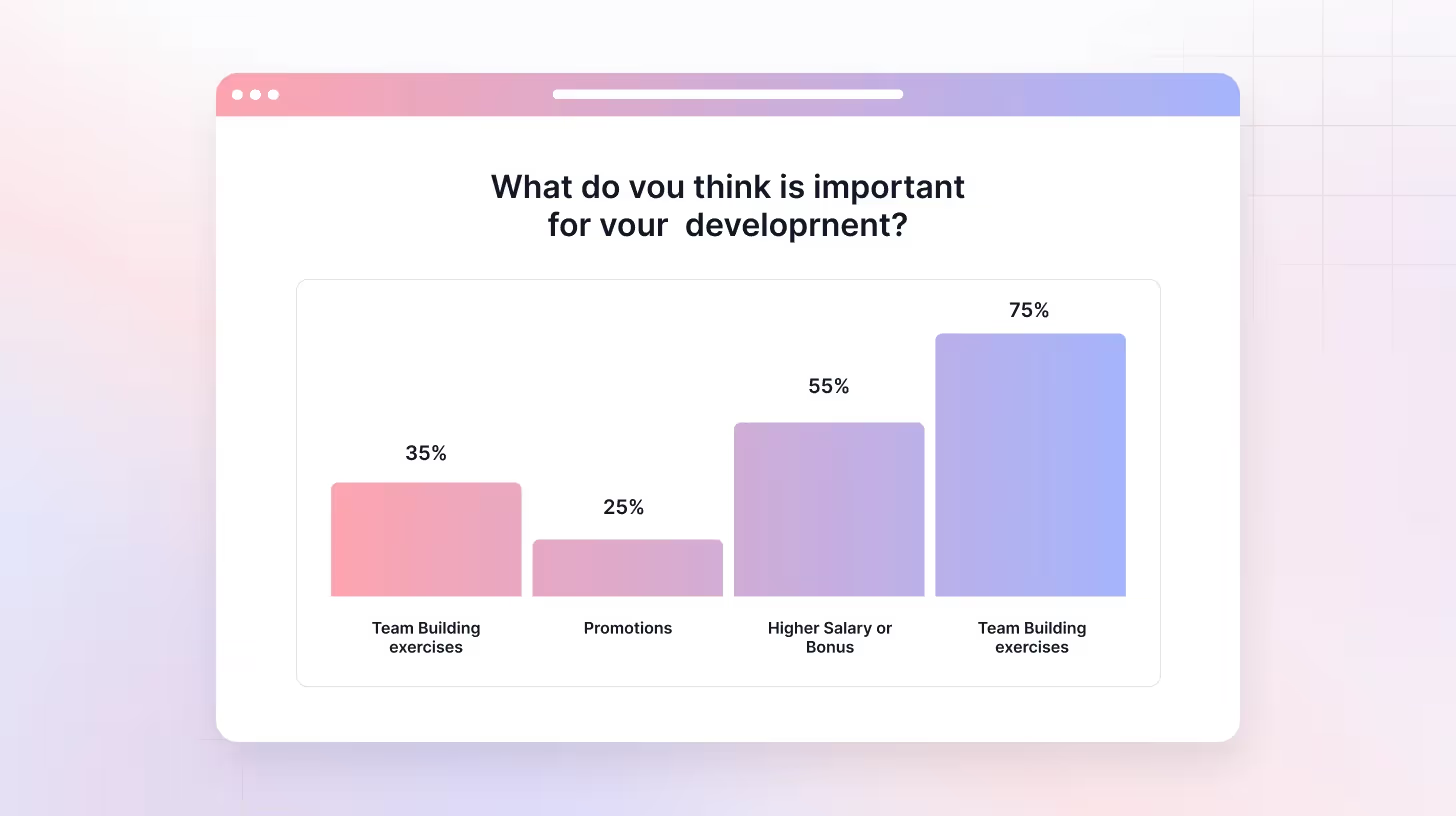
How To Make The Most Of Your Professional Development Survey
Below, you’ll learn how to get the most out of your survey, backed by strategy, psychology, and real-world examples.
Start with a Clear Purpose
According to Gallup research, only 2 in 10 employees say their performance is managed in a way that motivates them to do outstanding work, a trend that continues to challenge modern development programs.
Knowing what you are trying to cover by defining goals before conducting surveys can help you fix this. You should be crystal clear on what you're trying to learn.
For example, an HR team in a tech company runs a general growth survey. The responses they received were very vague. Next time, they conducted a survey by refining their purpose to “understand readiness for leadership roles.” This time, the survey feedback reveals a lack of feedback training and unclear promotion criteria.
Frame the Survey with Intention
LinkedIn’s Workplace Learning research shows that companies with strong communication around development opportunities are significantly more likely to retain employees.
When employees understand why their feedback is important, they are more likely to participate. Framing your survey with intention ensures that every question has a purpose, and each response helps you improve professional development within the company.
Start your survey with a clear message:
“We want to support your growth, not just today, but for the long run. This survey helps us understand what’s working, what’s missing, and how we can do better together.”
Segment the Data to Find Hidden Trends
Segment the data by role, department, tenure, or performance tier to identify patterns that will help you act more precisely.. For example, the marketing team feels blocked in their career development, and the sales team requires more leadership training. Segmenting these departments will allow you to personalize your support for each one.
With tools like TheySaid, you can use AI to cluster responses and instantly detect sentiment trends!
Repeat, Reflect, Improve
Successful professional development programs are built on the philosophy of repeat, reflect, and improve. Growth is not a one-time event; it is a continuous process. Begin by sending out surveys regularly, monthly, quarterly, or at important stages of the employee lifecycle. Then, take some time to reflect on the results. Look for patterns, gaps, and places for improvement.
Finally, apply those ideas to effect significant change. Consistent feedback allows you to move in the appropriate direction, whether you're introducing new projects, tweaking existing programs, or providing personalised development paths.
If you're ready to elevate your professional development surveys, book a free demo of TheySaid and see how we can help you make learning and growth a strategic advantage.
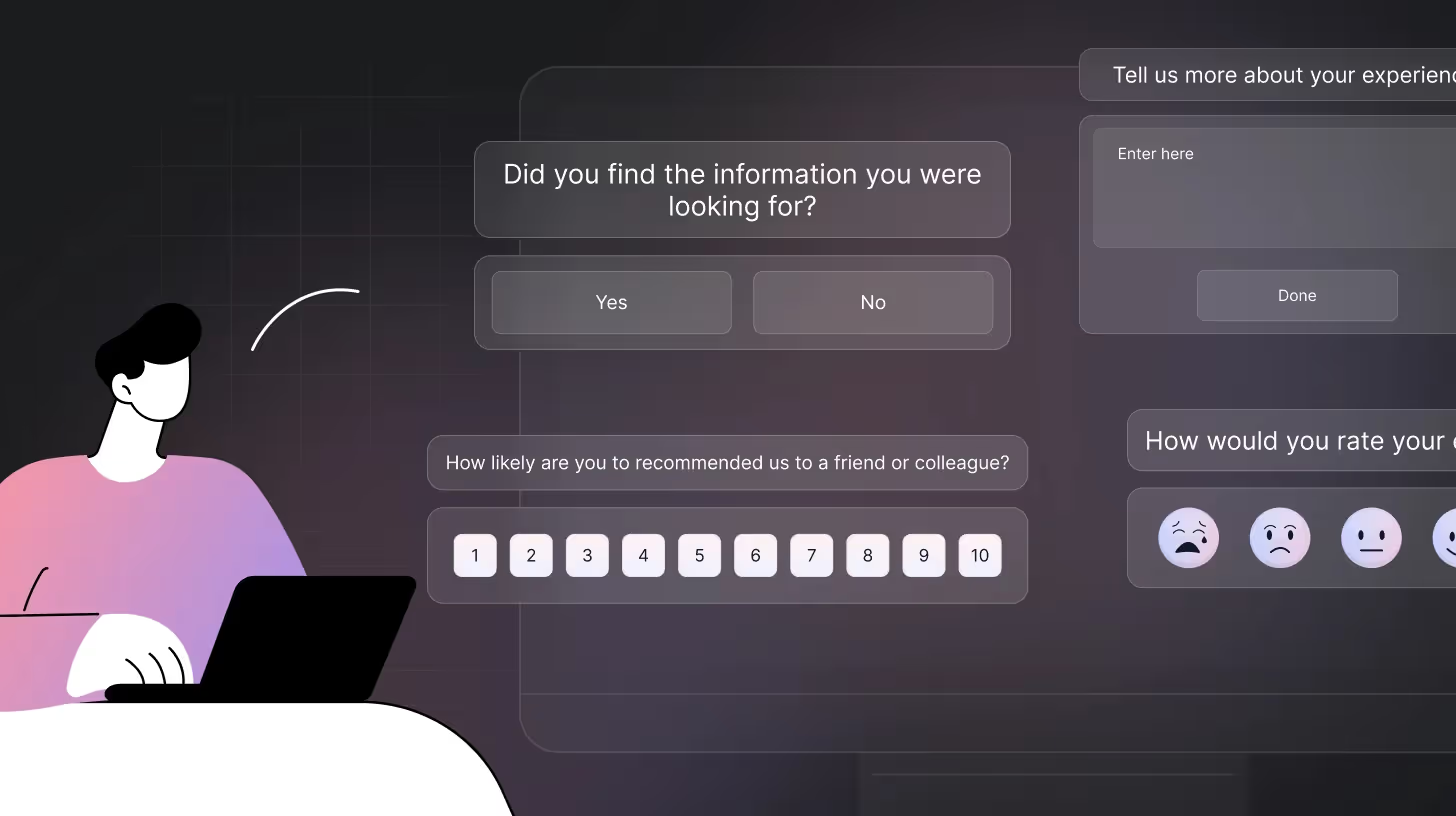
How to Analyze Professional Development Survey Results
To turn professional development survey responses into action, focus on patterns rather than individual comments.
- Identify skill gaps by tracking frequently mentioned missing skills or low-confidence areas.
- Evaluate training effectiveness by comparing satisfaction scores with performance and confidence improvements.
- Assess career readiness by aligning career aspiration responses with mentorship and leadership feedback.
- Spot retention risks when growth opportunities and promotion clarity score low.
Analyzing results this way helps HR and L&D teams prioritize development initiatives that create measurable impact.
Read: How Do You Analyze Survey Data Like a Pro?
How Often Should You Run a Professional Development Survey?
Most organizations run professional development surveys quarterly or biannually, depending on team size and growth pace. Surveys are also effective after major role changes, promotions, training programs, or leadership transitions.
Professional Development Surveys for Teachers
A 2023 report from the Learning Policy Institute found that only 4 in 10 teachers feel their professional development is ongoing and meaningful.
A professional development survey tailored for teachers helps school administrators and education leaders understand what support educators truly need to thrive in the classroom.
Here are some areas your teacher-focused survey can explore:
- Instructional skill development: Do teachers receive appropriate training to tackle today's classroom challenges?
- Curriculum support: Do instructors feel prepared to teach new material or meet evolving academic standards?
- Technology training: Are digital tools enhancing or hindering their teaching experience?
- Collaboration and mentorship: Do educators have access to peer learning, coaching, and mentoring programs?
- Career development: Is there clarity around leadership opportunities, certification pathways, or subject-area specialization?
Example questions:
- The professional development sessions I attend help me improve my instructional strategies.
- I have access to resources that support my continuous learning as an educator.
- I feel supported in exploring leadership roles within the school or district.
Recommended Read: Top 15 Classroom Survey Questions for Better Studen Insights
Create Professional Development Surveys with TheySaid
With TheySaid, you can easily create surveys that will help your team grow. There's no guesswork; just smart questions, fast insights, and actionable feedback.
Here's how TheySaid can help you level up.
- Create surveys in seconds, just drop in a URL, and our AI builds the survey for you
- Get smart question recommendations that align with your development strategy.
- Instantly visualize trends in skills gaps, training feedback, and growth readiness.
- Filter data by team, role, tenure, or performance to tailor your L&D initiatives.
- Turn responses into action plans, track progress, and keep development continuous.
Try it free or book a quick demo
FAQs
Why should I run a professional development survey?
To understand employee learning needs, evaluate existing L&D efforts, and build a culture of continuous growth. It helps retain talent and align training with real business goals.
How can I increase survey response rates?
Communicate the why, keep it anonymous, and follow up with results. Show employees that their input leads to real change.
Why is professional development important for teachers?
Ongoing professional development empowers teachers to stay updated with new teaching strategies, curriculum changes, and classroom technology, leading to better student outcomes and higher job satisfaction.
What’s the difference between a professional development survey and a performance review?
A professional development survey focuses on growth, learning needs, and future skills, while performance reviews evaluate past performance and outcomes. Using both together provides a complete picture of employee development.
Who should take a professional development survey?
Professional development surveys can be used by employees, managers, HR teams, L&D leaders, and educators. They are effective at different career stages, from early skill-building to leadership and mastery roles.


.svg)